Autonomous AI: The Evolution Transforming Business Intelligence
Explore how autonomous AI is revolutionizing business operations, from self-managing chatbots to predictive analytics that drive real results.
# Autonomous AI: The Evolution Transforming Business Intelligence
The artificial intelligence landscape has reached a pivotal moment where systems no longer require constant human oversight to deliver exceptional results. Autonomous AI represents the next frontier in machine intelligence—systems that can learn, adapt, and make decisions independently while continuously improving their performance.
Unlike traditional AI that follows predetermined rules, autonomous AI systems demonstrate genuine intelligence by analyzing patterns, predicting outcomes, and adjusting their behavior without human intervention. This evolution is fundamentally changing how businesses operate, particularly in customer service, data analysis, and operational efficiency.
For business leaders, understanding autonomous AI isn't just about staying current with technology trends—it's about recognizing a transformative force that will define competitive advantage in the coming decade.
Understanding Autonomous AI: Beyond Traditional Automation
Autonomous AI differs significantly from conventional automation systems. While traditional automation follows "if-then" logic, autonomous AI systems employ machine learning algorithms and neural networks to make independent decisions based on real-time data analysis.
These systems exhibit several key characteristics that set them apart:
A prime example is modern chatbot technology that goes beyond scripted responses. Advanced chatbots can understand context, remember previous conversations, and even predict what customers need before they ask.
The Technical Foundation
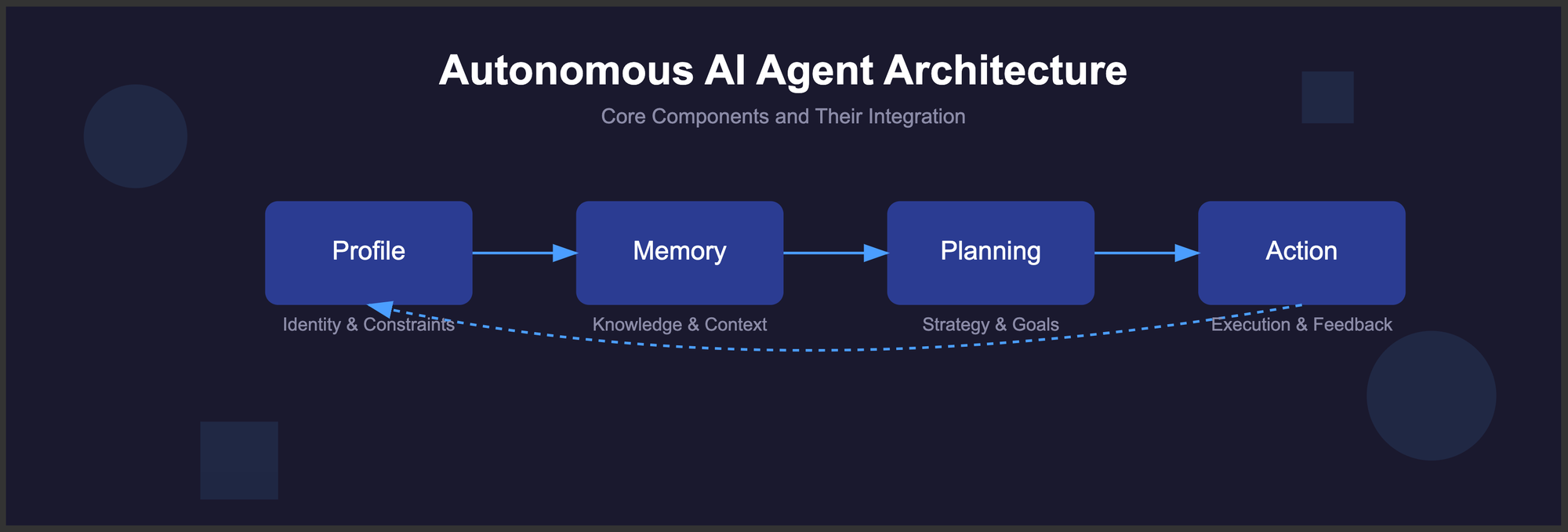
Autonomous AI systems rely on sophisticated architectures combining multiple AI disciplines. Natural Language Processing (NLP) enables understanding of human communication, while computer vision processes visual data. Reinforcement learning allows systems to learn from trial and error, similar to how humans acquire new skills.
The integration of these technologies creates systems capable of handling complex, multi-faceted problems that previously required human intelligence. This convergence has accelerated dramatically, with processing power and data availability reaching unprecedented levels.
Current State of Autonomous AI Technology
The autonomous AI market has experienced explosive growth, with global spending projected to reach $110 billion by 2024, according to IDC research. This growth reflects the technology's proven ability to deliver measurable business value across multiple industries.
Real-World Applications Today
Customer Service Revolution Companies like Mastercard have deployed autonomous AI systems that handle 85% of customer inquiries without human intervention. These systems don't just answer questions—they analyze customer sentiment, predict potential issues, and proactively offer solutions.
Financial Services Innovation JPMorgan Chase's autonomous AI systems process over 150 million transactions daily, detecting fraudulent activity in real-time while learning from new fraud patterns. The system's accuracy has improved by 40% over traditional rule-based systems.
Healthcare Breakthroughs Google's DeepMind has developed autonomous AI that can predict kidney injury up to 48 hours before it occurs, giving medical teams crucial time to intervene. The system analyzes thousands of patient data points simultaneously, identifying patterns invisible to human observation.
Performance Metrics and Impact
Early adopters of autonomous AI report significant operational improvements:
These metrics demonstrate that autonomous AI isn't just a theoretical concept—it's delivering tangible business value today.
Key Advancements Driving Autonomous AI Forward
Large Language Models (LLMs) and Conversational AI
The development of sophisticated language models has revolutionized how AI systems understand and generate human language. GPT-4 and similar models can engage in nuanced conversations, understand context across multiple interactions, and even demonstrate reasoning capabilities.
For chatbot development, this means creating systems that feel genuinely conversational rather than robotic. Users can interact naturally, ask follow-up questions, and receive responses that consider the entire conversation history.
Edge Computing Integration
Autonomous AI systems increasingly operate at the "edge"—closer to where data is generated rather than relying solely on cloud processing. This advancement enables real-time decision-making with minimal latency, crucial for applications requiring immediate responses.
Edge AI deployment has reduced response times from seconds to milliseconds, enabling applications like autonomous vehicles and real-time fraud detection that weren't previously feasible.
Multi-Modal AI Capabilities
Modern autonomous AI systems can process and understand multiple types of data simultaneously—text, images, audio, and video. This multi-modal approach enables more comprehensive understanding and better decision-making.
For example, customer service chatbots can now analyze a customer's written complaint while simultaneously processing uploaded images of a defective product, providing more accurate and helpful responses.
Federated Learning
This approach allows AI systems to learn from distributed data sources without centralizing sensitive information. Autonomous AI systems can improve by learning from multiple organizations' data while maintaining privacy and security.
Federated learning has enabled breakthrough applications in healthcare, where AI systems learn from patient data across multiple hospitals without compromising patient privacy.
Business Applications and Use Cases
Intelligent Customer Support
Autonomous AI has transformed customer support from reactive problem-solving to proactive customer success management. Modern systems can:
Zendesk reports that companies using autonomous AI for customer support see 25% higher customer satisfaction scores compared to traditional support systems.
Predictive Analytics and Business Intelligence
Autonomous AI systems excel at identifying patterns in large datasets that human analysts might miss. These systems can:
Retailers using autonomous AI for demand forecasting have reduced inventory costs by 30% while improving product availability.
Process Optimization
Manufacturing companies have deployed autonomous AI to optimize production processes in real-time. These systems monitor equipment performance, predict maintenance needs, and adjust operations automatically to maintain peak efficiency.
Bosch reports that autonomous AI has reduced unplanned downtime by 50% across their manufacturing facilities while improving overall equipment effectiveness by 20%.
Challenges and Considerations
Ethical and Responsible AI Development
As AI systems become more autonomous, ensuring ethical behavior becomes increasingly critical. Organizations must address:
Implementing robust governance frameworks and continuous monitoring helps ensure autonomous AI systems operate ethically and responsibly.
Technical Challenges
Data Quality and Availability Autonomous AI systems require high-quality, diverse datasets to function effectively. Poor data quality can lead to biased or inaccurate decisions, making data governance a critical success factor.
Integration Complexity Implementing autonomous AI often requires significant changes to existing systems and processes. Organizations must carefully plan integration strategies to minimize disruption while maximizing benefits.
Skill Gap and Training Successful autonomous AI deployment requires teams with specialized skills in machine learning, data science, and AI system management. Organizations must invest in training or hiring qualified personnel.
Security and Risk Management
Autonomous AI systems present new security challenges that organizations must address:
Implementing comprehensive security measures and regular vulnerability assessments helps protect autonomous AI systems from potential threats.
Future Outlook and Emerging Trends
Artificial General Intelligence (AGI) Progression
While true AGI remains years away, current autonomous AI systems are displaying increasingly sophisticated reasoning capabilities. The progression toward more general intelligence will enable AI systems to handle complex, multi-domain problems with minimal human oversight.
Research organizations predict that AGI-like capabilities in specific domains will emerge within the next 5-7 years, revolutionizing industries like healthcare, finance, and scientific research.
Quantum-Enhanced AI
Quantum computing promises to exponentially increase the processing power available for AI systems. Quantum-enhanced AI could solve optimization problems and process datasets that are currently impossible to handle efficiently.
Early experiments demonstrate quantum advantages in specific AI applications, suggesting significant potential for autonomous systems that can process vastly more complex scenarios.
Human-AI Collaboration Models
The future of autonomous AI isn't about replacing humans but creating sophisticated collaboration models where AI handles routine decisions while humans focus on strategic thinking and creative problem-solving.
Successful organizations will develop hybrid intelligence systems that leverage the strengths of both human creativity and AI efficiency.
Preparing Your Organization for Autonomous AI
Strategic Planning Considerations
Organizations should begin preparing for autonomous AI adoption by:
Starting with Chatbot Technology
Chatbots represent an accessible entry point into autonomous AI for most organizations. Modern chatbot platforms enable businesses to deploy intelligent conversational systems without extensive technical expertise.
Starting with customer service chatbots allows organizations to gain experience with autonomous AI while delivering immediate value through improved customer experiences and operational efficiency.
Conclusion: Embracing the Autonomous AI Future
Autonomous AI represents more than a technological advancement—it's a fundamental shift toward intelligent systems that can operate independently while continuously improving their performance. Organizations that embrace this transformation today will build significant competitive advantages for tomorrow.
The evidence is clear: autonomous AI delivers measurable business value through improved efficiency, better decision-making, and enhanced customer experiences. While challenges exist, the benefits far outweigh the risks for organizations that approach implementation thoughtfully and strategically.
Ready to explore how autonomous AI can transform your customer interactions? ChatSa's advanced chatbot platform combines cutting-edge AI technology with intuitive design, making it easy to deploy intelligent conversational systems that learn and improve over time. Discover how autonomous AI can enhance your customer experience while reducing operational costs.